fbpx

Golf for Kids: How to Start, Equipment, and Tips for Parents

Golf can be an extremely fun sport for kids to explore and play. Parents may have their reservations about introducing the sport to their kids. But ultimately, the process of playing golf can really help children practice patience and learn to stay focused for a long time while getting in touch with nature. Whether your kid is a 5-year-old or a 12-year-old, it’s never too late to find them a suitable golf club and teach them how to make a birdie.

Why Golf Is a Great Sport for Kids

Unlike other more competitive team or individual sports, golf is a good way to teach your kids to stay in the moment and trust the process. Especially in this age of instant gratification, where kids can easily get distracted by virtually anything and grow impatient when the progress is slow, a single lengthy round of golf allows your children to have a significant amount of time, while waiting or walking towards the next hole, to reflect on their game plan and adjust the strategy in solitude. This helps train their mental focus and strategic thinking ability. 

What’s the Best Age to PlayGolf for Kids

There’s no single “right” age to start. Some children begin swinging a club at three or four, while others don’t pick up the sport until their teens. That said, most instructors agree that ages 5 to 8 are an ideal window to begin structured lessons, when kids have developed enough motor control to follow basic instruction and hold their attention through a short session.

How to Teach a Kid to Play Golf

Teaching golf to children is quite different from coaching adults. Kids learn best through play, short sessions, and positive reinforcement rather than technical instruction. Here’s a simple approach to get started:

  • Start with the short game. Putting and chipping are less physically demanding and help kids feel a sense of early success. A sense of achievement keeps motivation high.
  • Focus on fun first. Avoid drilling too many rules in the early stages. Let kids explore the swing and enjoy being on the course.
  • Keep sessions short. Thirty to forty-five minutes is plenty for younger players. Ending on a high note keeps them eager to return.
  • Enroll in junior lessons. Professional coaches who specialize in junior golf know how to keep instruction age-appropriate, structured, and enjoyable.

When it comes to how to teach a 12-year-old to play golf, the approach shifts slightly. Tweens can handle more technical feedback and may respond well to on-course play, friendly competition, and tracking measurable progress, just like the data-driven approach used in professional club fitting sessions.

Simple Golf Swing Drills for Kids

Simple, fun drills make all the difference in building consistent technique without boring young players:

  • The Feet-Together Drill: Have your child hit short shots with their feet together. This builds balance and encourages a centered, controlled swing.
  • The Towel Drill: Tuck a small towel under both armpits and practice half-swings. It promotes connected arm movement and a repeatable path.
  • Target Putting Games: Set up small targets on a practice green and turn putting into a game. This builds distance control in a format kids love.
  • The Slow-Motion Swing: Ask your child to swing in slow motion, focusing on each part of the movement. This develops body awareness and muscle memory.

Essential Equipmentfor KidsLearning Golf

Choosing the Right Golf Clubs for Kids

When selecting golf clubs for kids, avoid clubs that are too long or too heavy for small players. A basic starter set for younger players typically includes a driver, a mid-iron (such as a 7-iron), a pitching wedge, and a putter. 

Other Basic Golf Gear for Young Players

Beyond clubs, a few essentials will keep your young golfer comfortable and ready to play:

  • Golf shoes with soft spikes for grip and stability on the course
  • Well-fitted glove to improve grip and protect the hand
  • Golf balls designed for junior players — lower compression balls help kids get more distance
  • Lightweight carry bag or stand bag sized for smaller players
  • Sun protection like hat, sunscreen, and UV-protective clothing for outdoor rounds

Tips for Parents Helping Kids Start Golf

Your role as a parent is to be a supportive presence, not an extra coach. Here’s how to help your child thrive:

  • Let the instructor lead. Avoid giving technical advice that contradicts what their coach says. Mixed messages can cause confusion and frustration.
  • Celebrate effort over results. Praise hard work, good attitude, and persistence — not just good scores.
  • Play together. Sharing the experience in the course builds connection and keeps kids motivated.
  • Be patient. Progress in golf is rarely linear. Some days will feel like a step backward — keep the long view in mind.
  • Invest in proper equipment. Well-fitted junior clubs remove unnecessary barriers and let kids focus on learning, not fighting their equipment.

FAQs About Golf for Kids

Can a 12-Year-Old Drive a Golf Cart?

While a 12-year-old cannot drive a golf cart, they can ride as a passenger. The majority of facilities in Hong Kong require players to be at least 18 years old to operate a cart independently. Always check the specific rules of the course you’re visiting before letting your child take the wheel.

How Can You Teach a 6-Year-Old to Play Golf?

Most 6-year-olds learn best through playful exploration rather than formal instruction. Keep sessions to 20–30 minutes, use foam or plastic practice balls for safety, and focus on putting and chipping before worrying about full swings. 

How Do You Teach a 6-Year-Old to Swing a Golf Club?

Start by teaching a basic grip, as this is simple and light, without tension. Let your child swing a sponge ball freely without worrying about form at this age. Encourage a smooth, rhythmic motion by saying “back and through” as they swing. 

Is 12 Too Late to Start Playing Golf?

Absolutely not. Age 12 is actually a great age to begin, as players can absorb instruction quickly and progress rapidly. Many junior and amateur golfers who started at 12 or later have gone on to play at a high level. For structured coaching tailored to young players, explore our junior and kids program at OGP Golf Lessons, where experienced instructors support beginners of all ages.

How to Hold a Golf Club Correctly for a Better Swing

Mastering the fundamentals is the fastest way to elevate your golf game, and there’s nothing more foundational than your grip. It may seem simple, 

but learning how to hold a golf club properly can make the difference between consistent shots and unpredictable results.
If you’ve ever wondered, “How do you hold a golf club?” to reduce hooks or slices, or looked up guides on how to correctly hold a golf club for better control, this walkthrough covers everything you need to know so you can skip the guesswork.

Why Your Golf Grip Matters

A solid grip is your only physical connection to the club, and it dictates far more than just comfort. The way your hands sit on the handle controls clubface position at impact, shapes the path of your swing, and influences the amount of power you can generate. Even a small adjustment in grip can change how consistently you strike the ball.
The grip also corrects or prevents common swing flaws. A balanced hold can reduce slices or hooks, promote a smoother tempo, and make it easier to square the face through impact. Without a reliable grip, even technically sound swings are likely to produce inconsistent results. That’s why golfers often revisit the basics of how to grip a golf club to keep their basics sharp.

Different Types of Golf Grips

The way you hold the club can influence everything from control to comfort. These are the three most common grip styles golfers use and why they matter.

Overlapping Grip (Vardon Grip)

This is the standard choice for many professionals, as it balances control and power. The trailing hand’s pinky rests over the lead hand’s index finger, creating stability without tension.

Interlocking Grip

Players with smaller hands often find this style more secure. The index finger of the lead hand locks with the pinky of the trailing hand, keeping the hands connected through impact.

Ten-Finger Grip (Baseball Grip)

Beginners and players with limited strength may prefer this option. All ten fingers stay on the club, which can make generating leverage and comfort easier.

Step-by-Step Guide: How to Hold a Golf Club Properly

Many players ask, “How do you hold a golf club in a way that feels natural yet effective?” Learning how to hold a golf club correctly starts with small details that affect every swing.  Follow these simple steps to build a reliable, repeatable grip.

1. Position the Club Diagonally in Lead Hand

Rest the grip across the base of your fingers rather than the palm. This placement promotes better control and a natural wrist hinge.

2. Wrap the Fingers Around Naturally

Curl your fingers so they sit comfortably on the handle. For right-handed golfers, the thumb should rest slightly right of center; for left-handed golfers, slightly left of center to guide the clubface.

3. Place Trailing Hand Below

Slide your trailing hand underneath so it supports the lead thumb. The palms should face each other, working together as one unit.

4. Check for “V” Alignment

Both hands should form “V” shapes pointing between your chin and right shoulder. This alignment helps square the clubface through impact.

5. Maintain Moderate Grip Pressure

Hold the club firmly enough to stay secure but not tense. A light squeeze rating around four out of ten works well for most players.

Common Mistakes When Holding a Golf Club

Even small grip errors can lead to big problems with ball flight. Here are the most frequent mistakes to watch for and how they affect your swing.

Gripping Too Tightly

A grip that’s too tight locks up the wrists and reduces swing speed. It also makes it harder to release the club smoothly through impact.

Holding in the Palm

When the handle sits deep in the palm, the swing loses leverage. This often leads to weaker shots and inconsistent contact.

Over-Rotated Hands

Hands that rotate too far open or closed change the clubface angle. The result is an increased risk of hooks, slices, or pushed shots.

Inconsistent Grip Across Clubs

Switching grips between drivers, irons, and wedges can cause mis-hits. A consistent hold builds reliable muscle memory across the entire set.

Transform Your Swing, Improve How You Grip a Golf Club

Improving your grip is one of the fastest, most effective ways to enhance your overall swing. When you understand how to correctly hold a golf club, you’re laying the groundwork for more consistent strikes, better ball flight, and increased confidence. It’s a small change that yields big results, whether you’re on the range or under pressure on the course.
Not sure if you’re gripping the club the right way? At OGP, players can strengthen their fundamentals with golf lessons in Hong Kong or optimize their setup through golf club custom fitting. Our coaching team combines expertise and technology to give you clear, personalized guidance, so your grip becomes a dependable foundation for every swing. Contact OGP today to begin building a swing you can trust!

Frequently Asked Questions About Golf Grip

What is the proper way to hold a golf club?

Rest the grip across your lead fingers instead of the palm. Both hands should form “V” shapes that point between your chin and trailing shoulder.

Do you hold a golf club in your fingers or palms?

The correct grip is in the fingers, not the palms. This allows better wrist hinge, smoother release, and more consistent contact.

How much grip pressure should you use in golf?

Think of holding the club firmly but not tightly, around four out of ten on a scale. This keeps the club secure while preventing tension in your arms.

Do all clubs require the same grip, including wedges, irons, drivers, and putters?

Yes, your grip should remain consistent across the set for reliable ball striking. The only exception is putting, where many golfers use a specialized grip style.

What Are the Benefits of Club Fitting: A Complete Guide for Every Golfer

Golf players, whether professional or amateur, are constantly looking for ways to improve their game. In pursuit of better performance, one key aspect that should be emphasized is the connection between the player and the golf club, which is more than just a piece of equipment; it is a golfer’s strongest ally. It complements the speed and power of your swing to hit the perfect shot. This is why club fitting is an important process; it helps you find an instrument properly fitted and tailored to your needs to win the game. In this guide, we’ll explain what it is and explore its benefits, allowing you to understand why this process is worth your time.

Summary

Golf club fitting offers many benefits, particularly in terms of measurable performance gains, for golfers of every level, from improved accuracy and tighter shot dispersion to better distance control and consistent gapping throughout the bag. A professional fitting also optimizes launch and spin for your swing speed, enhances comfort to reduce fatigue and injury risk, and builds confidence at address and in decision-making.

Golf Club Fitting Explained (and How It Works)

A professional club fitting is a personalized process to adjust and customize your golf clubs. It begins with understanding what your physical attributes and swing characteristics are, how you move, how you strike the ball, and how your current equipment performs under real conditions. Using advanced launch monitors and motion-capture technology, your fitter evaluates ball speed, launch angle, spin rate, and dispersion patterns. These data points create a unique performance profile that guides every recommendation to find the most suitable golf club for the player.

Static vs. Dynamic Fitting

Static fitting focuses on measurements that don’t change, such as your height, wrist-to-floor distance, and hand size. These form the baseline for club length, lie angle, and grip selection. But the real insight comes from dynamic fitting, which captures your motion in real time. Dynamic data reveals how the club interacts with the turf, how your swing path evolves through impact, and where energy is being gained or lost.

Measurements

Throughout the measurement session for club fitting, every variable is considered. Lie angle influences direction. Loft defines launch. Shaft flex and weight determine tempo, while grip size affects release. Using high-speed cameras and data analytics, fitters can pinpoint how even a half-degree adjustment transforms trajectory and distance control. The outcome is a full set of recommendations that align perfectly with your swing mechanics and benefit you in achieving your playing goals.

How Long a Fitting Takes and What You Should Bring

A full-bag fitting typically takes around two hours and possibly more, depending on the depth of analysis. It’s not a rushed experience but a dialogue between player and professional. Bring your current clubs so your fitter can compare performance improvements, your usual golf shoes and glove for grip consistency, and the golf balls you play, since every model spins differently.

The Proven Benefits of Club Fitting

When your golf club is fitted to your natural motion, the game begins to feel intuitive again. Each swing becomes more efficient, every strike more predictable, and progress more measurable. In detail, club fitting can offer the following benefits:

Improved Accuracy & Tighter Dispersion

Properly fitted clubs promote centered contact and correct face alignment through impact. The result is fewer wayward shots, a tighter shot pattern, and more fairways found. You’ll start to see misses that are smaller and recoveries that are easier.

Better Distance Control & Gapping

Distance isn’t just about power; it’s about predictability. One of the biggest benefits of club fitting is that it ensures your clubs are evenly spaced in carry distance, allowing you to plan every approach with confidence. Whether you’re hitting a controlled wedge or a full-flighted 7-iron, you’ll know exactly how far your ball will go.

Optimized Launch & Spin for Your Swing Speed

Each player generates speed differently. A slower tempo may need higher launch and added spin; a faster swing might demand lower spin for control. Through launch monitor analysis, your fitter fine-tunes lofts, shafts, and ball combinations to achieve ideal flight, maximizing carry and minimizing dispersion.

More Consistency Across the Bag

The ultimate advantage of fitting is uniformity. Your driver, irons, wedges, and putter should feel like part of one coherent system. Once every club complements your swing, transitions become smoother, distance gaps even out, and confidence builds with every shot in the bag.

Comfort, Fatigue Reduction & Injury Prevention

When your clubs match your physical mechanics, your body moves more efficiently. You’ll notice less strain in your wrists, elbows, and lower back, even during long rounds or practice sessions. Properly fitted shaft flex and length minimize compensations that often lead to overuse injuries, keeping you stronger and pain-free over time.

Confidence at Address and On-Course Decision-making

Perhaps one of the most frequently overlooked benefits of club fitting is gaining confidence in your equipment; it gives you the freedom to swing decisively and focus on your game to perform your best. When you stand over a club that feels right, the setup feels natural, and shot commitment comes easier.

Long-Term Value

A well-fitted set is an investment that transcends trends. While club models evolve yearly, your specifications and your swing DNA remain largely consistent. With periodic rechecks, a professionally fitted set can serve you for years, adapting as your game improves rather than forcing you to start over.

How to Prepare for a Fitting

Preparation ensures you get the most from your session. Treat your fitting like a performance evaluation, one that begins with honest data and ends with a roadmap to better golf.

What Data to Bring

Before your appointment, jot down key details about your current setup: average distances with each club, common misses, and your scoring goals for the season.

What to Wear/Bring

Wear your usual golf attire and shoes to replicate your on-course posture and movement. Bring the glove and golf balls you use regularly. The goal is to create an environment that mirrors how you actually play.

Questions to Ask Your Fitter

The best fittings are conversations. Ask your gold club fitter how each recommendation influences performance, what swing tendencies they observe, and which adjustments offer the most benefits to your game.

Choose a Qualified Fitter

The right fitter doesn’t just sell clubs; they elevate players. At OPG, every golf club fitting is conducted by certified professionals who blend technical expertise with coaching insight. Our process is brand-agnostic, meaning recommendations are made solely on performance data, not sales bias. Using advanced technology, we tailor each club to your swing profile. After your fitting, our aftercare program continues to assist you with follow-up adjustments, re-checks, and guidance on when to re-fit as your swing evolves. Consider reaching out to us for a club fitting today to find your perfect golf ally.

Best Core Workouts for Golf to Boost Swing Power & Control

In golf, power and precision go hand in hand. One of the most critical yet often underestimated aspects of improving your swing is core strength. No matter your current skill level, developing core stability can dramatically influence how efficiently and confidently you move on the course.

In this guide, we’ll explain why core training matters and share the best core exercises for golf that are tailored to your swing mechanics. These aren’t just gym moves; they’re targeted techniques to help you play smarter, swing stronger, and reduce your risk of injury.

Why Core Strength Matters in Golf

The power behind your swing doesn’t start in your arms — it begins at your center. Your core includes the muscles that stabilize your spine, hips, and pelvis, all of which work together to control rotation, maintain balance, and support clean, repeatable swing mechanics.

Here’s why targeted golf core workouts are essential for improving performance:

Stronger Rotation for More Controlled Power

The coil-and-release motion of your swing relies on obliques, transverse abdominis, and deep spinal stabilizers. A strong core allows you to rotate with speed and precision, giving your swing both power and accuracy without sacrificing control.

Improved Balance and Posture Throughout the Swing

Core muscles anchor your upper and lower body, keeping your spine aligned during setup and through impact. This leads to better weight transfer, more stable footwork, and fewer mis-hits caused by swaying or early extension.

Reduced Risk of Fatigue and Injury

Core endurance keeps your swing consistent across 18 holes and protects your lower back from strain. A strong core absorbs force efficiently, which means less wear on your joints and more energy conserved for each round.

Best Golf Core Workouts for Golfers

These targeted core exercises for golf focus on rotational strength, stability, and endurance — all key elements of a more powerful and efficient swing. Below are some of the best core workouts for golf you can start using right away, without the need for too much specialized equipment:

Plank Variations

Start with forearm planks, then progress to side planks or plank reaches. These build trunk stability and reinforce the posture you need at address and impact, helping maintain core engagement throughout your swing.

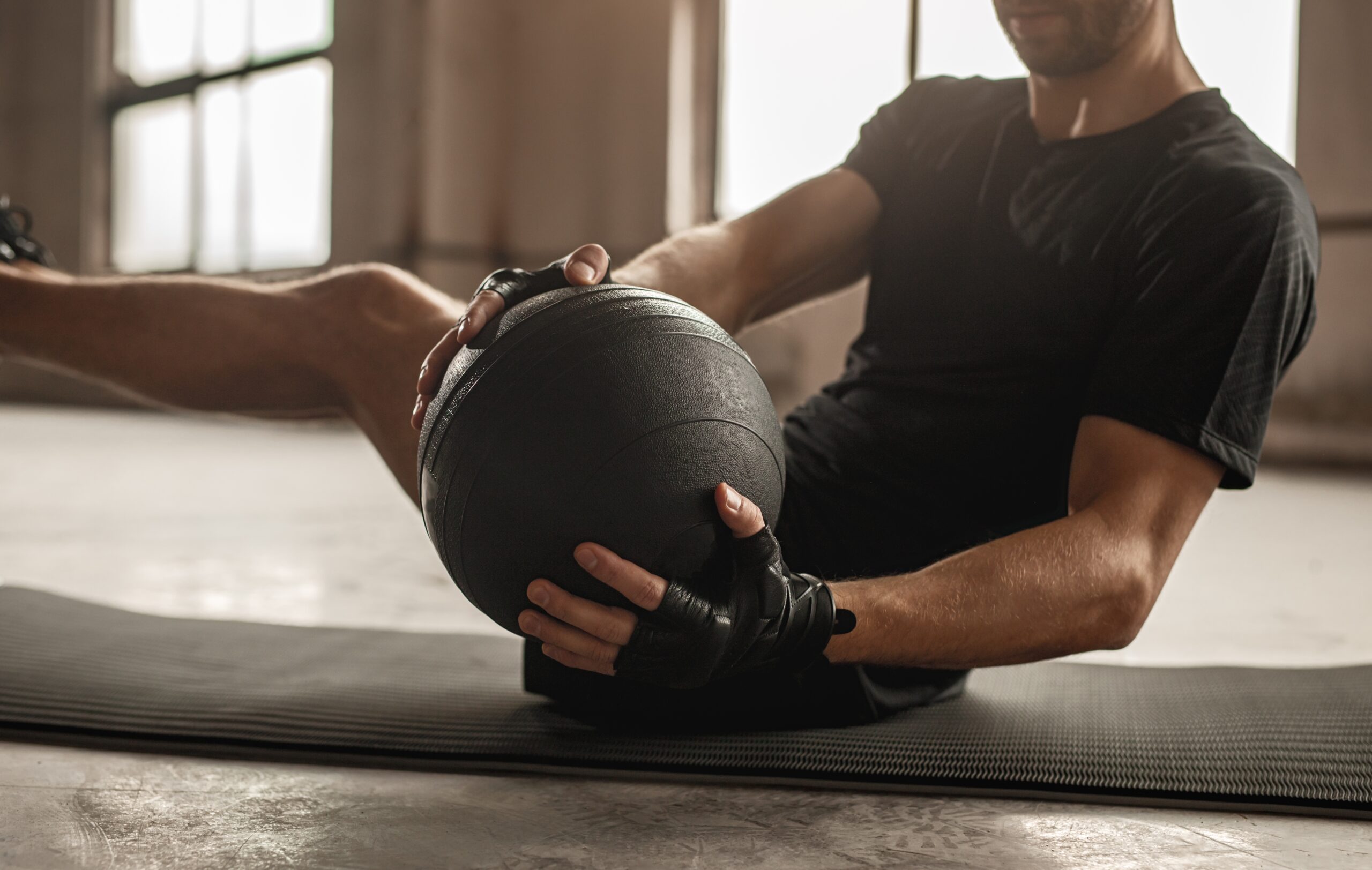
Russian Twists with Medicine Ball

A dynamic move that mimics the rotational motion of your swing. This exercise strengthens the obliques and helps generate torque, improve follow-through control, and boost rotational force in your golf game.

Dead Bugs

Train your core to stabilize while your limbs move, which is exactly what your body needs during the backswing-to-downswing transition. Great for control, injury prevention, and cross-body coordination during movement.

Cable Woodchoppers

This explosive movement replicates your swing plane. As one of the best core exercises for golf, it builds rotational strength, movement precision, and lasting muscle memory for consistent performance.

Glute Bridges with March

Targets the posterior chain while also challenging lower core control. Excellent for golfers struggling with lower back tightness, hip instability, or balance issues at impact and follow-through.

Standing Anti-Rotation Press (Pallof Press)

Reinforces resistance against rotation, keeping your spine and pelvis aligned. This exercise improves swing control, prevents sway, and builds deep core stability under load or tension.

Bird Dogs

Simple yet powerful, bird dogs activate your core and strengthen lower back stability while training coordination and balance. Ideal for improving posture, sequencing, and spine safety during your swing.

Stability Ball Rollouts

A controlled rollout on a stability ball engages the entire core and helps simulate the forward energy shift of your downswing. Great for core extension control, impact power, and tempo awareness.

How to Add Core Workouts to Your Golf Routine

Knowing the best core workouts for golf is one thing, but integrating them into your schedule is what makes the difference. Check out these helpful tips to make your training stick:

Be Selective

Select exercises from the list above that address specific weaknesses that are holding you back. When it comes to training, keeping it simple will yield better results than trying to do everything. The body needs repetitive stimulation of the same exercises to adapt.

Use Core Workouts in Your Warm-Up

Five to 10 minutes of dynamic core work before practice can activate key muscles and improve your swing from the very first tee, especially during early holes.

Pair Workouts with Golf Lessons

When paired with professional golf lessons, these exercises help reinforce proper technique, enhance body awareness, and prevent bad movement habits from developing.

Prioritize Quality Over Quantity

Focus on slow, controlled movements and proper form. Doing fewer reps with better form beats rushing through a high-volume workout that doesn’t serve your golf goals.

Adjust Exercises Based on Your Swing Goals

Want more power? Prioritize rotational drills. Need more control? Emphasize anti-rotation and stability to create a more customized and effective training approach.

It All Starts at the Core

Core strength is the foundation of an efficient, powerful, and injury-resistant golf swing. By investing time in structured core workouts for golf, you’re building the physical tools needed for a more athletic and consistent game. Whether you’re driving for distance or fine-tuning your short game, your core is doing more work than you think.

Looking to accelerate your progress even further? Our strength & conditioning coaches can provide tailored training programs to match your goals, whether you’re focused on performance, injury prevention, or long-term game longevity. You may also consider combining these workouts with personalized instruction from the OGP team, who can help refine your technique, improve movement efficiency, and bring out your full potential on the course through golf lessons.

What Is a Golf Handicap? A Beginner’s Guide to Handicap Index

Golf is often seen as a game of skill, patience, and precision, but it’s also a game built on fairness—that’s where the concept of a golf handicap comes in. Whether you’re new to the sport or looking to understand how your scores measure up, knowing your handicap is one of the most empowering steps you can take as a golfer.

In this guide, we’ll explain what a golf handicap is, how to calculate a handicap index, and why even beginners should embrace it early on. With clear steps and practical tips, you’ll be able to check your standing and improve your game with more confidence.

What Is a Golf Handicap?

A golf handicap is a number that represents a golfer’s potential ability based on past performance. It allows players of different skill levels to compete on a more level playing field. The lower the handicap, the better the golfer is considered to be.

So, what does a golf handicap mean for the average player? It means that you don’t have to be a pro to play competitively. The handicap system ensures that a beginner with a handicap of 30 can still enjoy a fair match with a more experienced player whose handicap is in the single digits. This creates a more inclusive and engaging golfing experience for everyone.

You might be wondering, what is this to a beginner? For those new to the sport, a starting handicap typically reflects the average of your best rounds. It helps you track your improvement over time and gives you a benchmark to work toward. Understanding your golf handicap—what it means and how it’s used—can dramatically shift your perspective on progress and play.

How to Calculate Handicap Index in Golf

If you’re ready to take your game more seriously, you’ll want to learn how to calculate a handicap index. Fortunately, it’s not as complicated as it might seem.

Your handicap index is a measure of your potential ability, calculated using the best of your recent scores. The system takes into account the course rating (difficulty for a scratch golfer), the slope rating (relative difficulty for a bogey golfer), and your score differentials (how your actual score compares to expected performance).

Once you’ve played a few rounds—typically 3 to 20—your handicap index is calculated using the average of your lowest score differentials. These differentials are adjusted to reflect the difficulty of each course you’ve played, not just your raw scores.

Step-by-Step: How to Calculate Handicap in Golf

Here’s a simplified guide to help you understand how to calculate a handicap in golf:

  1. Record your adjusted gross scores for at least three rounds of golf.
  2. Calculate the Score Differential for each round using this formula:
    • Score Differential = ((Adjusted Gross Score – Course Rating) × 113) ÷ Slope Rating
  3. Average the lowest differentials, based on how many rounds you’ve submitted:
    • For 20 rounds: average the lowest 8 differentials
    • For fewer rounds: average fewer, based on a sliding scale (e.g., lowest 1 for 3–5 scores, lowest 3 for 10 scores, etc.)
  4. Multiply the average by 0.96 to get your official Handicap Index.
    • Handicap Index = Average of lowest differentials × 0.96
  5. Convert your Handicap Index to a Course Handicap using:
    • Course Handicap = Handicap Index × (Slope Rating ÷ 113)

Most golfers now use official systems, such as GHIN or apps provided by local golf associations, which automate the process of tracking and updating scores. If you’re based in Hong Kong, handicaps are managed by the Golf Association of Hong Kong, China (HKGA) under the World Handicap System. Their platform is a helpful resource for golfers learning how to calculate the handicap index and maintain accurate scoring records.
For more information on registering your first handicap in Hong Kong, check out this handicapping resource from HKGA.

Key Tips for Managing and Improving Your Golf Handicap

More than mastering trick shots, improving your handicap is about building a solid foundation. Here are some specific and practical tips to help you lower your handicap efficiently and sustainably.

Track Every Round, Even the Bad Ones

It might be tempting to only log your best rounds, but accurate tracking of all your scores is essential to maintaining a valid handicap. Consistency is key when learning how to calculate a handicap effectively in golf.

Focus on Your Short Game

Putting and chipping often account for more than half your strokes. Improving this area can yield fast results and significantly reduce your overall score.

Play Courses with Varying Difficulties

Your handicap index reflects the difficulty of the courses you play. Exposing yourself to a range of course ratings and slope challenges helps build adaptability.

Take Golf Lessons from a Certified Instructor

Professional coaching can correct bad habits early and speed up your progress. OGP offers a range of golf lessons in Hong Kong tailored to all skill levels, perfect for those serious about improving their game.

Don’t Obsess Over Every Round

Your golf handicap—what does it mean if you have one bad day? Not much. The system is designed to capture your potential, not penalize you for the occasional rough round.

Stay Physically and Mentally Fit

Flexibility, endurance, and focus are essential for consistency. Incorporating full-body fitness, including core workouts, along with mental conditioning, can make a noticeable difference in your performance over time.

Level Up with a Better Understanding of Golf Handicaps

At its core, understanding what a golf handicap is and how to calculate a handicap index isn’t just about numbers; it’s about becoming a smarter, more strategic player. A handicap gives you a personal blueprint for progress and a fair platform to measure your growth. And for beginners, it provides a confidence-boosting framework to track improvement without comparison or pressure.

At OGP, we’re here to support you on your golfing journey, whether you’re learning what a golf handicap is for a beginner or fine-tuning your swing for competitive play. With expert coaching and flexible golf lessons, we’ll help you improve your game, understand your stats, and enjoy every round even more.

A Guide to Master Your Golf Putting Skills

Putting can make or break your golf game. It’s the final step on each hole, and mastering it can significantly lower your scores. Yet, many golfers underestimate its importance and struggle with consistency. Learning golf putting basics can transform your short game and make you a more confident player.

In this guide, we’ll explore everything from putting basics to advanced techniques. Whether you’re new to the game or looking to refine your skills, these tips will help you understand what putting in golf is and how you can excel at it.

What is Putting in Golf?

Putting in golf is the act of gently rolling the ball along the green with the goal of getting it into the hole. Unlike other golf shots, putting emphasizes precision and control rather than power. It requires a delicate touch to judge distance, speed, and break, making it one of the most strategic aspects of the game.

Putting is a crucial part of the short game, accounting for nearly half of all strokes in a typical round. Mastering golf putting basics can dramatically lower your scores by reducing three-putts and capitalizing on birdie opportunities. By developing consistent techniques and learning to read greens accurately, golfers can transform putting from a weakness into a scoring strength.

Golf Putting Basics: Key Techniques for Success

To master golf putting basics, you need a strong foundation through practicing consistently. Here are some key techniques that can help you improve your putting accuracy and confidence:

Proper Stance and Grip

Your stance and grip provide balance and control during the putting stroke. Stand with feet shoulder-width apart and distribute weight evenly. Experiment with grip styles, like traditional overlap or cross-handed, to find what feels comfortable and stable.

Alignment and Aim

Accurate alignment is key to consistent putting. Align shoulders, hips, and feet parallel to the target line. Position the ball slightly forward to promote a smooth stroke. Focus on aiming at a target point for better accuracy.

Reading the Green

Reading the green involves observing slopes, grain direction, and speed. Visualize how the ball will break and adjust your aim accordingly. Practicing on different greens enhances your judgment and anticipation.

Distance and Speed Control

Consistent speed control prevents three-putts. Maintain a steady tempo throughout the stroke. Practice lag putting to improve touch and distance control, leaving shorter second putts.

Putting Stroke Mechanics

A pendulum-like stroke ensures accuracy. Keep arms and shoulders moving as a unit while minimizing wrist movement. A consistent stroke path improves accuracy and repeatability.

Visualization and Focus

Mental preparation boosts putting confidence. Visualize the ball’s path and the speed needed. A pre-putt routine enhances focus and reduces anxiety, leading to more consistent putts.

Follow-Through and Finish

A smooth follow-through maintains speed and control. Avoid decelerating or stopping abruptly, as this causes missed putts. Practice a balanced finish for improved accuracy.

How to Improve Putting in Golf: Tips and Practice Drills

Improving your putting skills requires dedication and effective practice. Below are proven tips and drills to help you learn how to improve putting in golf and become a more confident putter:

1. Gate Drill for Accuracy

Place two tees slightly wider than your putter head to create a gate. Practice putting through the gate without touching the tees. This drill improves alignment and promotes accurate, square contact.

2. Distance Control Ladder Drill

Set up markers at different distances on the green and putt to each one. This drill enhances touch and feel for varying distances. It improves speed control and helps avoid three-putts.

3. One-Handed Putting Drill

Put with only your dominant hand to develop better feel and control. This drill reveals wrist movements that affect accuracy. It builds stability and promotes a smoother stroke.

4. Circle Drill for Short Putts

Place tees in a circle around the hole, about three feet away. Make each putt in succession without missing. This drill builds confidence and reinforces alignment and speed control.

5. Pressure Putting Drill

Challenge yourself to make a series of consecutive putts from the same distance. If you miss, start over. This drill improves focus and mental toughness under pressure.

Enhancing Your Putting Skills with the Capto Putting System

The Capto putting system is a cutting-edge tool that provides real-time feedback on your putting stroke. It analyzes key metrics such as face angle, stroke path, and tempo, giving you precise data to improve your mechanics. These metrics can help you make data-driven adjustments for better accuracy and control.

At OGP, golfers can enhance their putting skills using the Capto putting system. It helps players identify inconsistencies and develop a more consistent stroke. With its instant feedback, golfers can fine-tune their golf putting basics and build a more reliable routine.Practicing with the Capto putting system at OGP allows you to simulate real-world conditions. Whether you’re a beginner or an experienced golfer, this advanced technology helps you improve faster by providing actionable insights.

Make Every Putt Count

Mastering golf putting basics is the key to lowering your scores and gaining confidence on the greens. By practicing the right techniques and maintaining a consistent routine, you can develop a reliable stroke that performs under pressure.

Take Putting Lessons at OGP

Not sure where to start or struggling to see improvement? Consider taking putting lessons at OGP with the Capto putting system to identify and fix problem areas faster. OGP has the perfect solution to take your putting to the next level. Practice in a professional environment with expert guidance and advanced training tools. With personalized coaching, you’ll get practical guidance tailored to your unique putting style.

Our lessons provide a structured approach to mastering the fundamentals while building confidence in the greens. From alignment and speed control to stroke consistency, a professional OGP coach can help you improve key aspects of your game. Contact us today and make every putt count with confidence and precision!

Best Bunker Shot Tips: How to Hit Any Sand Bunker Shot

Mastering bunker shots can be the difference between a great round of golf and a frustrating day on the course. Many golfers dread the sight of a sand bunker, but with the right techniques, you can confidently escape any tricky situation.

Whether you’re dealing with a steep lip, buried lie, or a long carry to the green, learning how to execute the perfect bunker shot is essential. In this article, we’ll explore practical strategies and expert tips to help you navigate any golf sand bunker with confidence.

Understanding the Basics of Bunker Shots

A bunker shot is a golf stroke made from a sand-filled hazard on the course, commonly known as a sand bunker. The objective is to lift the ball out of the sand and onto the green with control and accuracy. This shot requires a different technique compared to regular swings due to the interaction between the club and the sand.

But what exactly makes a bunker shot so challenging?

  • Sand Dynamics: Unlike regular shots on grass, the club must interact with the sand before striking the ball, which can affect both distance and direction. Understanding how sand resistance impacts the club’s movement is key to controlling the shot.
  • Different Lies: The ball can be buried, on a slope, or sitting cleanly on top of the sand. Each scenario requires a different approach, demanding adaptability and quick decision-making.
  • Mental Pressure: Bunker shots often come with the added pressure of avoiding embarrassment or high scores. This mental barrier can lead to hesitancy and poor execution.

Master the basic bunker shot to improve your short game. By practicing proper technique and knowing how to read sand conditions, you’ll be better equipped to handle any situation that arises in a golf sand bunker, ultimately boosting your confidence and performance.

Best Techniques for Hitting Any Sand Bunker Shot

Hitting a great bunker shot isn’t about sheer power but rather a delicate mix of finesse and precision. Master specific techniques to navigate any sand bunker situation. Here are considerations and tips to best help you conquer the hazards:

Open Your Stance and Clubface

Position your feet slightly open to the target line and open the clubface. This setup allows you to use the bounce of the club and prevent it from digging too deep into the sand. It also helps to create a softer landing, giving you better control over the ball’s distance and direction.

Ball Position and Weight Distribution

Place the ball slightly forward in your stance, with about 60% of your weight on your front foot. This helps create a steeper angle of attack and ensures you strike the sand before the ball. Maintaining this balance throughout the swing leads to more consistent and accurate shots.

Aim Behind the Ball

Focus on hitting the sand approximately two inches behind the ball. This will lift the ball out of the golf sand bunker with a high, soft landing. Practice this technique to build confidence and help you judge distances more accurately.

Accelerate Through the Shot

Maintain a steady tempo and accelerate through the shot. Decelerating can cause the club to dig too much or result in a thin, bladed shot. By accelerating smoothly, you ensure a clean exit from the sand, preventing the club from getting stuck.

Control Your Follow-Through

A full follow-through ensures that the club maintains speed through the sand, helping the ball pop out effortlessly. Avoid stopping your swing abruptly, as this can reduce power and accuracy. Practice fluid, continuous motions for better shot consistency.

Practice Different Lies

Not all bunker shots are the same. Practice from uphill, downhill, and buried lies to build confidence and adaptability. By simulating these scenarios, you’ll be prepared for any situation on the course.

Visualize the Shot

Before executing the basic bunker shot, visualize the trajectory and landing spot. This mental rehearsal boosts confidence and enhances focus. Visualization helps you commit to the shot, reducing anxiety and hesitation.

Use the Right Club

Choose a wedge with the appropriate loft and bounce for the specific situation. Experimenting with different clubs during practice helps identify your go-to option. Knowing when to use a sand wedge versus a lob wedge enhances your strategic play.

Mastering Bunker Shots Through Practice

The key to mastering these techniques is consistent practice. However, not all practice facilities provide the right environment. This is where OGP in Hong Kong offers a unique advantage for golfers looking to perfect their short game.

Unlike synthetic alternatives, OGP uses a real sand indoor bunker to replicate authentic course conditions. Our innovative 2-tier green design allows golfers to practice various bunker scenarios, from straightforward shots to more complex situations. This exceptional feature makes it the perfect place to practice your bunker shot skills.

Practicing on a golf sand bunker like the one at OGP enhances your ability to handle real-world challenges on the course. By simulating different lies and sand conditions, you can fine-tune your technique and gain the confidence needed to conquer any bunker.

Located conveniently in Causeway Bay, we offer unmatched accessibility for busy golfers. Whether you’re looking to practice before work or during a lunch break, you can sharpen your skills without leaving the city at OGP.

Take Control of Your Bunker Shots with Confidence

Mastering bunker shots is essential for improving your short game and lowering your scores. By understanding the basics and practicing the best bunker tips, you can transform your approach to the sand bunker and gain a competitive edge.

Learn Sand Bunker Shot Techniques at OGP

If you’re unsure about your technique or struggling with consistency, consider taking bunker lessons at OGP. Our experienced instructors provide personalized guidance to help you master the fundamentals of bunker shots.

With expert coaching and state-of-the-art facilities, you can build confidence and improve your short game. No matter your skill level, our tailored lessons will help you develop effective techniques and achieve better results on the course.

Contact OGP in Hong Kong and experience our real sand indoor bunker. With authentic conditions and an innovative 2-tier green design, we provide the perfect setting to practice and perfect your bunker shot techniques. Don’t let bunkers intimidate you—conquer them with confidence at OGP!

Proper Backswing in Golf: Understanding the Right Length

The backswing plays a crucial role in shaping your golf swing, setting up the foundation for power and control. Yet, many golfers grapple with questions about how long their backswing should be and how it affects their performance. Striking the right balance between length and efficiency can make a noticeable difference in your shots.

In this article, we’ll explore the elements of a proper golf backswing, identify signs of imbalance, and share drills to fine-tune your technique. Whether you’re working on consistency or looking to add distance, these insights will guide you toward better results on the course.

What is Backswing in Golf?

In golf, backswing refers to the movement where the club is drawn away from the ball and positioned at the top of the swing, ready for the downswing. This motion sets the stage for generating power and control, making it a pivotal element in every golfer’s technique.

A well-executed backswing creates a seamless transition into the downswing, maximizing energy transfer while maintaining accuracy. By focusing on developing a proper golf backswing, players can significantly improve both their distance and consistency.

Factors That Influence Backswing Length in Golf

Determining the right length for your backswing involves multiple factors. Understand these elements and tailor your technique to maximize your performance.

  • Body Flexibility: Limited flexibility can restrict your ability to achieve a full backswing. Incorporate stretches and mobility exercises to gain more range of motion.
  • Strength and Stability: Strong core and lower body muscles provide the foundation for a stable backswing. Without adequate strength, longer backswings may lead to loss of balance or inconsistency.
  • Swing Mechanics: Personal swing style determines the optimal backswing length. For instance, compact swings often prioritize control, while longer swings emphasize power.
  • Club Selection: The type of club you’re using influences your backswing length. Wedges typically require shorter backswings, while drivers allow for more extended movements.

Signs Your Backswing in Golf is Too Long or Short

An improper backswing length can lead to inconsistent performance. Recognizing these signs will help you adjust and improve your swing.

1. Inconsistent Ball Striking

Erratic ball contact often stems from having a backswing that isn’t well-suited to your swing style. A swing that’s too long can cause a loss of control, while a swing that’s too short limits your ability to generate sufficient power.

2. Loss of Balance

If you find yourself struggling to maintain stability during your swing, it may indicate that your backswing exceeds your physical capacity. Adjust your backswing to stay within your range of control to maintain stability and improve shot consistency.

3. Lack of Distance

Shots that frequently fall short are a common sign of an overly short backswing. Gradually extend your swing within your comfort zone to add the power you need for longer distances.

4. Overrotation of the Hips

An excessively long backswing often results in unnecessary hip rotation. This misalignment can disrupt your swing plane and reduce shot accuracy.

Golf Backswing Drills to Improve Consistency

Drills are essential for refining your golf backswing. The right exercises can help you identify weak areas, improve muscle memory, and achieve a swing that’s both powerful and precise.

1. Slow-Motion Practice

Break down your swing by practicing in slow motion to focus on every detail. Pay close attention to the alignment of your arms, shoulders, and hips as you bring the club back. This method helps you identify and correct irregularities while reinforcing a more consistent movement.

2. Towel Under Arm Drill

Place a small towel under your lead arm and keep it in position throughout your swing. This drill encourages a connected motion by preventing your arms from moving independently of your body. With repetition, you’ll develop a compact and efficient proper golf backswing.

3. Wall Backswing Drill

Stand a few inches away from a wall and practice your backswing without letting the club hit it. This exercise teaches you to maintain the correct swing plane and avoid overextending. It’s especially useful for golfers looking to improve control without sacrificing power.

4. Mirror Feedback Drill

Practice your backswing in front of a mirror to observe your form from different angles. Check your positioning at various stages to ensure your swing remains consistent. Visual feedback from this drill can help you pinpoint and eliminate common errors.

5. Alignment Stick Drill

Attach an alignment stick to your club and practice swinging while monitoring its path. This simple tool highlights any excessive lateral movement, helping you stay on track. Over time, this drill sharpens your ability to maintain proper posture and swing rhythm.

Achieve Proper Backswing in Golf with Expert Lessons

Improving your backswing can be a challenge, but professional guidance can make all the difference. By working with a coach, you’ll gain personalized insights into your technique and identify areas for improvement. Lessons can help you develop a proper golf backswing tailored to your physical abilities and playing style.

At OGP, our golf lessons in HK combine expert coaching with advanced tools like simulators to provide an in-depth analysis of your swing. From perfecting your backswing to revamping your overall technique, our instructors offer tailored guidance and resources to take your game to the next level.

Master the Perfect Golf Backswing for Long-Term Improvement

In any game of golf, achieving the ideal backswing length is about balance—finding the sweet spot where power and control come together. By understanding your physical capabilities and practicing targeted golf drills, you can develop a backswing that complements your playing style and enhances your performance.

If you’re ready to refine your swing, OGP offers golf lessons designed to help players of all levels. Our expert instructors and state-of-the-art facilities provide the perfect environment to master your golf backswing and unlock your potential on the course. Book your session today and start your journey toward consistent, confident play!

How to Improve Short Game Golf Techniques for Consistent Play

In golf, the short game is where matches are won or lost. No matter how far or straight your drives are, it’s your skill around the green that often determines your final score. From chipping and pitching to precise putting, the short game is all about finesse and control.

In this article, we’ll delve into actionable strategies to help you master your short game golf techniques. Whether you’re looking to sharpen your accuracy or lower your scores, these tips will help you achieve consistent improvement.

What is the Short Game in Golf?

The short game in golf refers to all strokes played within 100 yards of the green, including putting, chipping, pitching, and bunker play. These strokes demand precision and creativity, as they often involve unique challenges like uneven lies, varying turf conditions, or tricky sand traps.

Unlike long drives, the short game emphasizes skill over power. It’s about controlling ball trajectory, spin, and speed to set up the perfect shot. Golfers who excel in their short game have a significant advantage, as they can recover from difficult positions and save strokes more effectively than those who solely rely on their driving game.

Why the Short Game is Critical in Golf

Golfers often obsess over perfecting their long drives but overlook the reality that a substantial portion of strokes—usually over half—are made within 100 yards of the green. For this reason, mastering short game golf is essential to improving scores and lowering handicaps.

Another critical reason to focus on the short game is its role in recovery. Whether it’s a wayward drive or an imperfect approach shot, strong short game skills give golfers the tools to minimize mistakes and turn potentially disastrous holes into salvaged pars or bogeys. The short game also boosts confidence, as players with refined skills are better equipped to handle high-pressure situations.

Practical Tips to Improve Short Game in Golf

Improving your short game isn’t about overhauling your style—it’s about adopting simple, effective habits that yield consistent results. These strategies will show you how to improve your short game in golf, helping you refine your skills and lower your scores.

1. Focus on Chipping Fundamentals

Maintain a narrow stance with your weight slightly forward. Use a steady, pendulum-like motion to achieve consistent ball contact. Practice with different clubs to adjust trajectory and roll for various situations.

2. Improve Your Green Reading

Spend time analyzing slopes, grain direction, and green speed. Before you putt, visualize the ideal path the ball should take to reach the hole. This skill, coupled with routine practice, significantly enhances your golf short game.

3. Hone Your Pitching Accuracy

Pitching requires touch and control. Use wedges of varying lofts to target different distances. Practice swing tempo and follow-through to create consistent spin and stop the ball near the hole.

4. Perfect Your Bunker Play

When faced with a bunker shot, open your clubface and stance to allow the sand to help lift the ball. Focus on hitting the sand an inch behind the ball for a smooth, controlled escape.

5. Incorporate Lag Putting Drills

Lag putting is essential for long-distance accuracy. To reduce the risk of three-putting, practice drills that focus on leaving the ball within a 3-foot radius of the hole.

6. Control Your Tempo and Rhythm

Whether you’re chipping or putting, consistent tempo is key. Avoid rushed motions and focus on smooth, rhythmic swings to achieve better accuracy and control.

7. Practice With a Purpose

Structure your practice sessions with specific goals. Dedicate time to improving weak areas, whether it’s sand shots, lobs, or precision putts, by applying effective golf short game tips. Use alignment aids or drills to measure your progress.

8. Use Visualization Before Every Shot

Imagine the trajectory, spin, and landing spot of your ball before taking a shot. This mental preparation enhances confidence and improves execution.

Benefits of Indoor Practice for Short Game Golf

Indoor golf facilities, such as OGP’s indoor driving range in Hong Kong, offer cutting-edge tools and a controlled environment for improving your golfing skills. These facilities are ideal for implementing golf short game tips and transforming your short game.

Data-Driven Insights

Simulators provide real-time feedback on ball speed, spin rate, and trajectory. These metrics help golfers identify flaws quickly and make precise improvements.

All-Weather Accessibility

Indoor facilities allow uninterrupted practice regardless of rain, heat, or wind, ensuring consistent training year-round.

Customized Training Programs

Indoor ranges offer targeted sessions to refine specific skills, such as putting or bunker play. These programs help golfers address weak areas effectively.

Repetition Without Distractions

A controlled indoor setting reduces interruptions, enabling focused practice. This focus is key to building muscle memory and improving consistency.

Technology-Assisted Progress

Tools like swing analyzers and video playback offer actionable insights into your performance. Over time, they help track progress and refine your game.

With these benefits, practicing at an indoor driving range in Hong Kong can dramatically enhance your short game techniques.

Refine Your Golf Short Game for Consistency and Confidence

Mastering your golf short game is about precision, creativity, and strategic practice. From refining chipping and pitching to improving putting accuracy, focusing on these techniques allows you to save strokes, recover from tricky positions, and approach each round with confidence.

Here at OGP, our indoor driving range offers a convenient and technology-driven solution to elevate your game. With advanced tools and a focused practice environment, you can take significant steps toward transforming your short game. Invest in your skills today and experience the difference they make in the course. Contact us to get started!

The Essential Skills Every Beginner Golfer Should Prioritize

As a beginner golfer, it can be overwhelming trying to figure out where to focus your time and energy. Do you work on increasing your distance off the tee? Fine-tuning your iron play? Honing your short game skills around the green?

The truth is, there are a few key areas that should be the primary focus for any aspiring golfer just starting out. Master these fundamentals, and you’ll build a solid foundation that will serve you well as you continue to develop your game.

1. Ball Striking

 Perhaps the single most important skill to cultivate as a beginner is consistent, solid ball striking. Developing the ability to make contact with the center of the clubface when you hit the ball should be your number one priority.

This means working on your swing mechanics, from your grip and stance to your swing plane and tempo. Concentrate on making clean, centered contact time and time again. Don’t worry too much about distance or trajectory at this stage – just focus on hitting the ball solidly, and swinging consistently. Getting a good coach is the key to success here, and there is no shortage of good golf coaches here at OGP.

2. Short Game

 While the driver and woods may get all the glory, the short game is where the majority of your scoring opportunities will come from as a beginner. Spend ample time practicing your chipping, pitching, and putting. Especially from 50 yards and in.

Mastering these core short game shots will pay huge dividends on your scorecard. Learn to consistently get the ball close to the hole from just off the green, and watch your scores start to tumble. So, how can you practice this in a busy city like Hong Kong?

Despite it being tricky to actually get outside to chip and putt sometimes. There are options to practice this part of the game. In fact, OGP is now an ideal, indoor destination to do so.

We have just opened up our brand new Short Game Studio (SGS), which encompasses our all-under-one-roof mentality, making us a haven to attack any and every part of your golf game ( I promise you, this is an unbiased opinion). The SGS is home to a state-of-the-art ZEN Green stage platform-the first in Hong Kong in fact. With silent motion accuracy of 0.1%, the Zen Green Stage can tilt and adjust in countless ways, allowing you to tackle every type of sloped putt and uneven lie imaginable.

In addition, the SGS includes an 11-hole chipping green, with thick, grainy rough and pure rolling greens, as well as a REAL sand bunker room. And it’s all indoors. Really, what more could you ask for.

3. Course Management

 In addition to honing your physical skills, it’s crucial to develop smart course management habits as a beginner. This means learning to make intelligent decisions about club selection, target lines, and risk/reward scenarios.

Don’t just grip it and rip it – think through each shot and choose the most prudent play. Avoid unnecessary risks, and focus on putting yourself in the best position to score. Sound course management will help mitigate the inevitable ups and downs of your game. Talk to people, especially coaches,  and try to get out there on the course. The more you play, the more you’ll learn (hopefully!). 

The Bottom Line


As you start your golfing journey, remember to keep things simple. Solid ball striking, a reliable short game, and smart course management should be the cornerstones of your practice and play. Golf is tricky, and it takes time to improve, but it feels oh so good when you finally do!

Mastering these fundamental skills will provide an excellent foundation upon which you can gradually build more advanced techniques and strategies. Stay patient, trust the process, and enjoy the journey of improvement.

×